A dual crane lift is a lift where two cranes carry a single load together, moving in sequence under one lift plan. It’s also called a tandem lift, and it is one of the more demanding jobs in rigging. The distinction matters: this is not two cranes working side by side on the same site. It is one load, two machines, and no margin for a mismatched movement.
At Sventek Cranes & Rigging, we plan and run these lifts across Melbourne and regional Victoria, and the work always starts well before either crane arrives on site.
A dual crane lift means two cranes sharing a single load
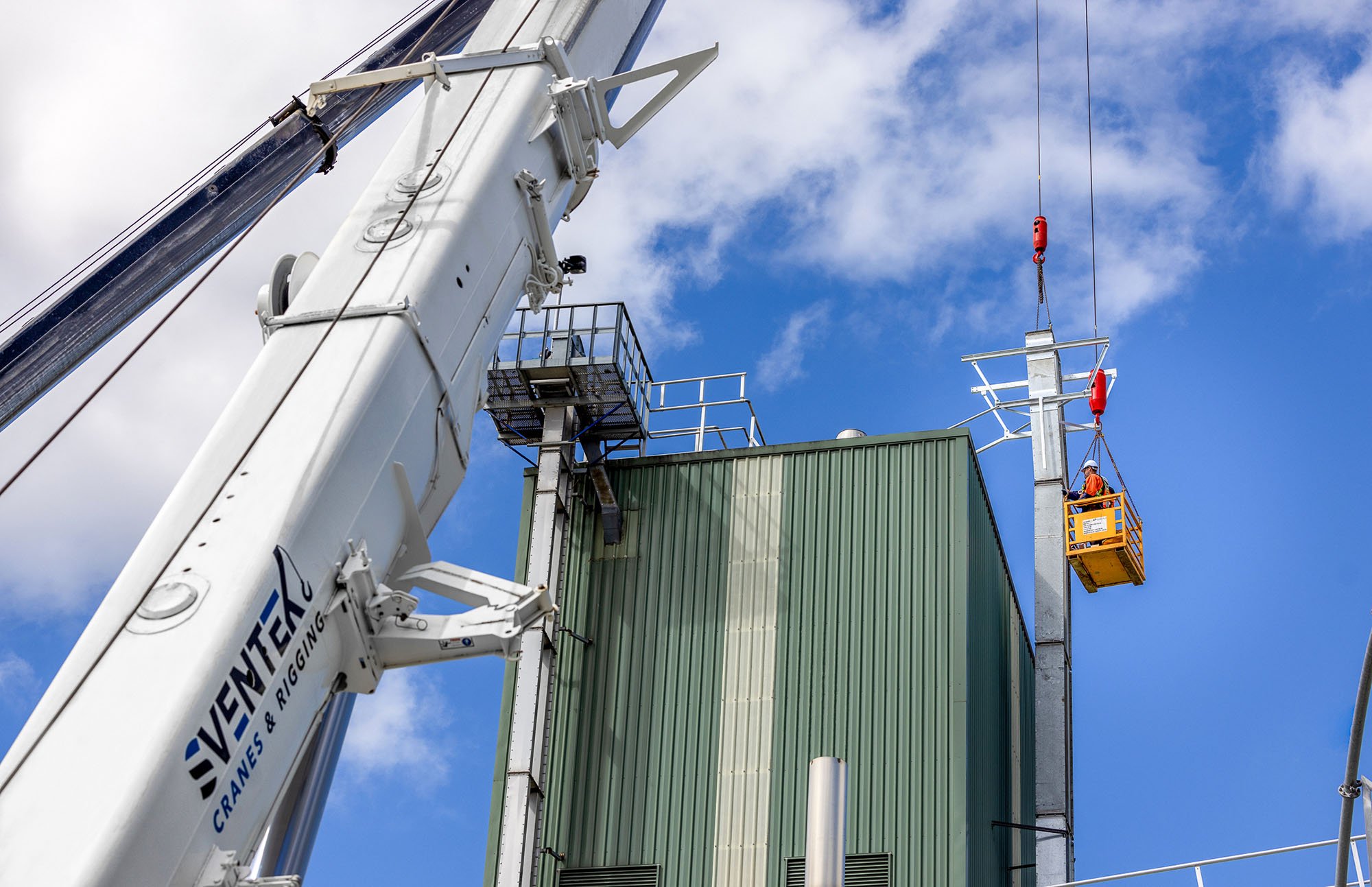
In a dual crane lift, both cranes are rigged to the same object and operate as one system. One lift plan covers both machines, one supervisor controls the sequence, and every movement is coordinated between the two crews. Two cranes hoisting separate loads at opposite ends of a site have nothing to do with one another - that is simply two lifts happening at the same time.
There are two broad ways a dual lift is set up:
• Shared load through the full lift. Both cranes take a portion of the weight from the moment the load leaves the ground until it is landed and released.
• Transfer between cranes. One crane takes the load as the other gives it up, usually to move an object beyond the reach of a single machine, or to change its orientation part-way through.
In Australian dogging and rigging guidance, this sits under the broader category of “multiple hoist lifting” (if you are reading up on the requirements, that’s the phrase the standards and the regulators use).
What is a tandem crane lift? Same lift, different name.
A tandem crane lift is the same thing as a dual crane lift - two cranes, one load, one plan. The terms are interchangeable. "Tandem" turns up more often in overseas literature and manufacturer documentation, while "dual" tends to be what you hear on Australian sites. You’ll also come across "twin lift" for the same practice.
"Multi-crane lift" is the wider umbrella term. It covers dual and tandem lifts, and it also covers the rarer jobs where three or more cranes work a single load. Those are uncommon, and the engineering behind them scales up sharply, but the principles are the ones described here.
When two cranes are the right call
Two cranes are not a default. They answer a specific set of problems:
• The load is heavier than any crane that can reach the site. A bigger machine might exist, but if it can’t get down the street or set up in the available footprint, it’s not an option.
• The load is long, flexible or awkward. Bridge beams, roof trusses, glulam members, tanks and long precast panels can bend, twist or fail if they are picked from a single point. Two cranes spread the support.
• The load has to be turned or upended. Tailing a long object from horizontal to vertical needs a second crane to control the bottom end through the rotation.
• Site access dictates it. Two smaller machines will sometimes fit where one large one never will.
We see all four regularly, particularly on structural steel installation and precast concrete panel installation work.
The honest answer is often the opposite, though. Where a single larger crane can safely do the job, that’s almost always the better choice - fewer variables, fewer people, and less that can go wrong. A crane company worth hiring will tell you so before quoting you for two.
Why dual crane lifts are harder than they look
The difficulty is not the weight. It’s that the weight won’t stay where you put it.
Load sharing shifts during the lift. As the load tilts, or as either crane's radius changes, weight transfers from one machine to the other. A load split evenly on the ground doesn’t stay evenly split in the air, so each crane has to be rated well above its nominal share.
Rated capacity is reduced. Because of that shift, standard practice is to derate both cranes for multi-crane work rather than run them at their single-lift ratings.
Movements have to be synchronised. Two operators, one sequence, one set of signals. Hoisting, slewing and luffing all need to match.
Dynamic loading punishes any sudden input. A sharp start or stop on one crane immediately transfers load to the other. Dual lifts are run slowly and deliberately for exactly this reason.
Ground conditions matter at two set-up points. Both pads need assessing, and a failure under either machine puts the whole load at risk.
Rigging has to account for all of it. Spreader bars and spreader beams often do the work of keeping the load stable and the sling angles correct across both hooks.
What an Australian dual crane lift plan has to cover
Dual crane lifting is high risk construction work. In Victoria, that brings it under the OHS Regulations, which require a safe work method statement before anyone starts, while the lift itself is governed by AS 2550.1, the Australian Standard for the safe use of cranes. WorkSafe Victoria enforces both.
A compliant dual lift plan is specific to the lift - a generic template simply won’t do. It needs to cover:
• A documented lift study for this load, on this site, with these two cranes
• Verified load weight, dimensions and centre of gravity, not an estimate off a drawing
• Load distribution calculated for each crane at every stage, including the worst case
• Crane positions, radii, boom configurations and counterweight for both machines
• Rigging design, with all gear rated for the shared load and the sling angles involved
• One appointed lift supervisor with the authority to stop the lift
• Agreed communication between both crews - radio channel, hand signals, and who calls what
• Exclusion zones, ground assessment and documented wind and weather limits
• A site-specific SWMS
Our rigging team builds these plans with clients rather than handing over a document at the gate. For the general version, our post on setting up a safe crane lift plan covers the fundamentals.
Who needs to be on the ground?
A dual lift needs two qualified crane operators, dogmen and riggers working both ends of the load, and a lift supervisor whose call is final. Electrical spotters are added where powerlines are in play. Every one of those roles has to be briefed on the same sequence, which is far easier when the crews already work together day to day.
Planning a dual crane lift in Melbourne?
If your project needs two cranes, getting both from one operator removes a great deal of risk. One lift plan, one supervisor, and one crew that has run the sequence before, rather than two hire companies trying to agree on a method. Our fleet runs from Franna pick and carry cranes to Liebherr mobiles and compact Maeda crawlers, and we handle heavy lifting and specialised lifting across Melbourne, Greater Melbourne and Victoria. Get in touch to talk through your lift.